> ## Documentation Index
> Fetch the complete documentation index at: https://docs.carletonblockchain.ca/llms.txt
> Use this file to discover all available pages before exploring further.
# How the Blockchain works
> A high level overview of the technical aspects of Blockchain.
# What is a Blockchain?
Resources Used:
> TLDR : Imagine a blockchain is like an append only, singly linked-list that anyone in the world can see.
# Key Concepts
## Hash
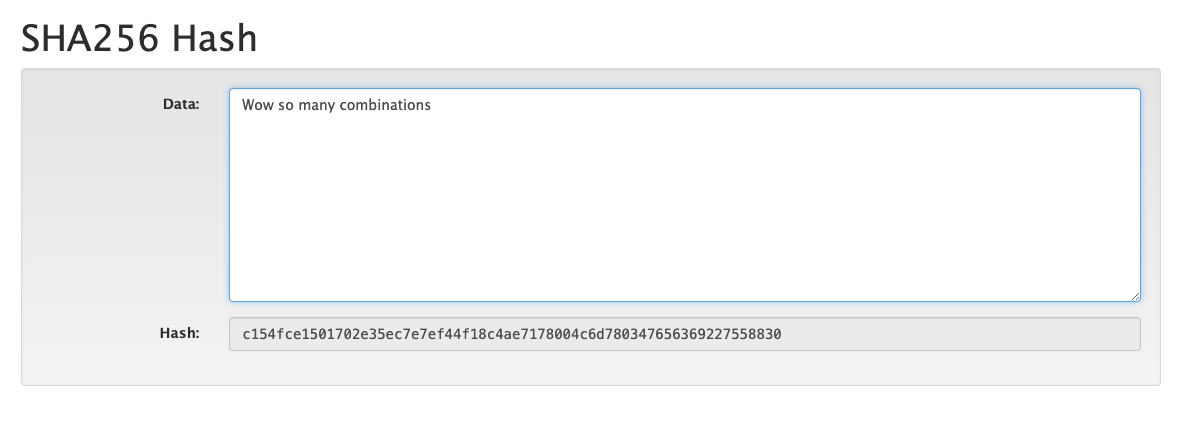
A hash is a fingerprint of some digital data.
Regardless if the input data is 1 char or an entire library, a unique hash will be generated. SHA-256 (Secure Hash Algorithm 256-bit) produces a fixed-size 256-bit hash value.
```math theme={null}
2^{256} = 1.1579209 \times 10^{77} \space \text{combinations}
```
According to [Bitbo](https://bitbo.io/how-many-users), there is reportedly 200 million active Bitcoin addresses.
The chances you randomly guess/brute force a seed phrase is about:
```math theme={null}
1/8.6 \times 10^{-78}
```
> TLDR: The odds someone hacks your Bitcoin address through guessing/brute force is essentially 0.
 ## Block
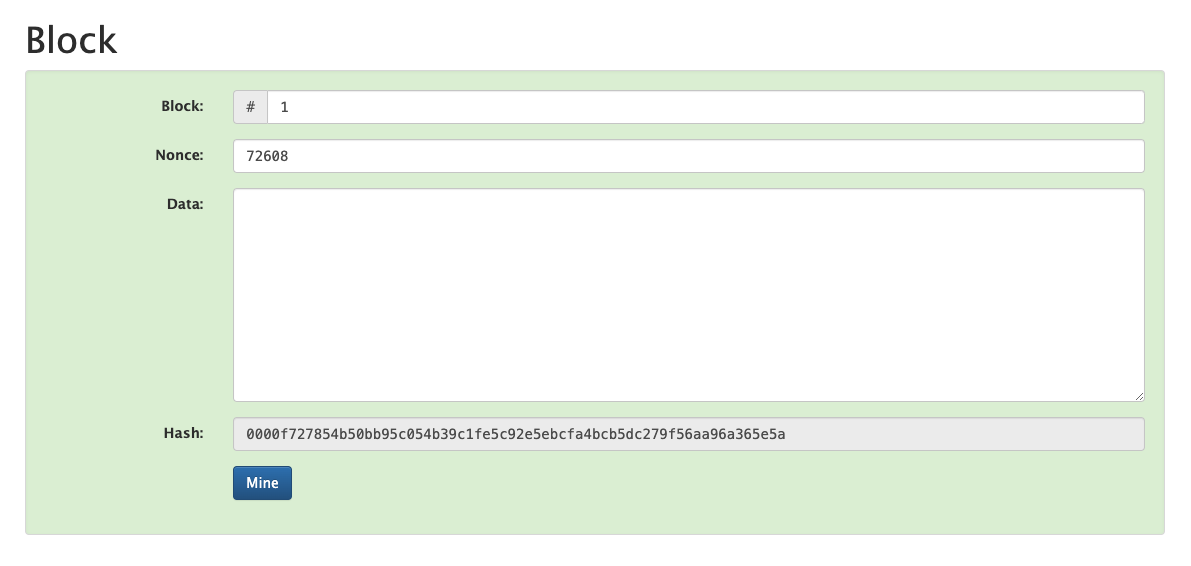
A block is a container that holds a list of transactions or data records.
### Components
* **Data**: Transactions or records that the block stores
* **Nonce**: A value used in mining to find a valid hash
* **Hash**: Digital signature combining block number, data, previous block's hash, nonce, and timestamp
## Block
A block is a container that holds a list of transactions or data records.
### Components
* **Data**: Transactions or records that the block stores
* **Nonce**: A value used in mining to find a valid hash
* **Hash**: Digital signature combining block number, data, previous block's hash, nonce, and timestamp
 ## Blockchain
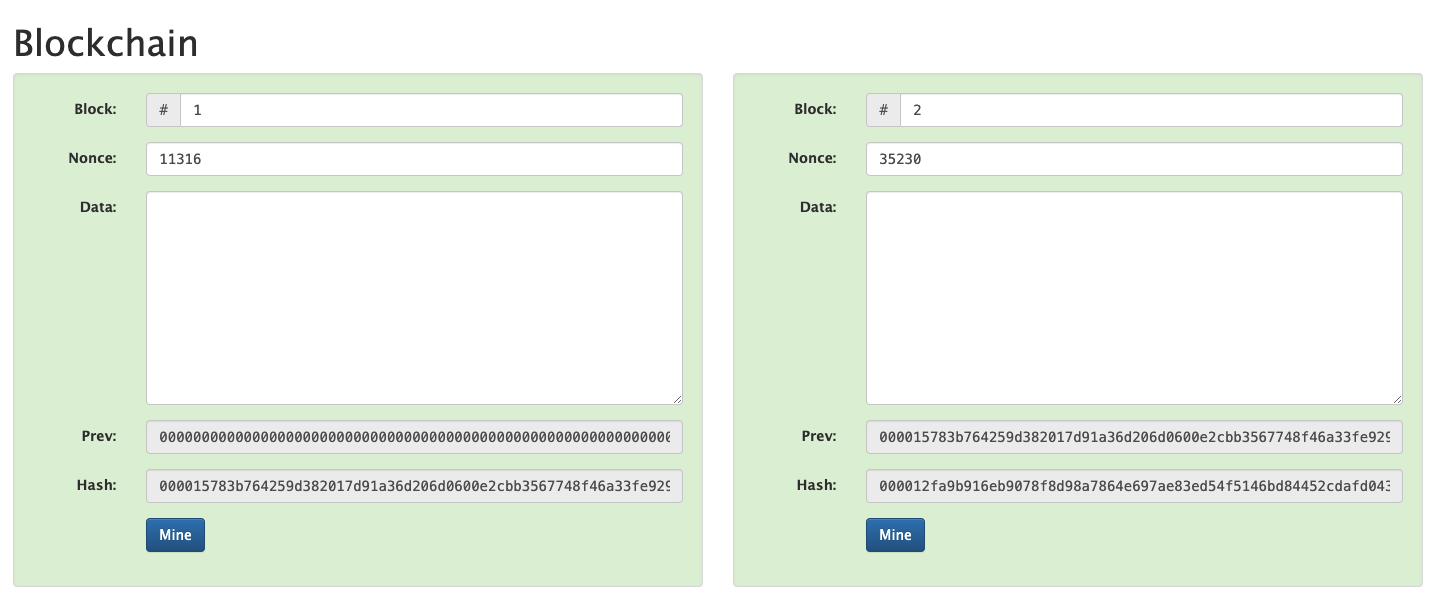
A chain of blocks that are cryptographically linked together.
Blockchains are "immutable" because changing ANY data in a block will:
* Change the hash of that block
* Invalidate all subsequent blocks
* Each block can hold \~4,000 transactions (1MB limit)
## Blockchain
A chain of blocks that are cryptographically linked together.
Blockchains are "immutable" because changing ANY data in a block will:
* Change the hash of that block
* Invalidate all subsequent blocks
* Each block can hold \~4,000 transactions (1MB limit)
 ## Distributed System
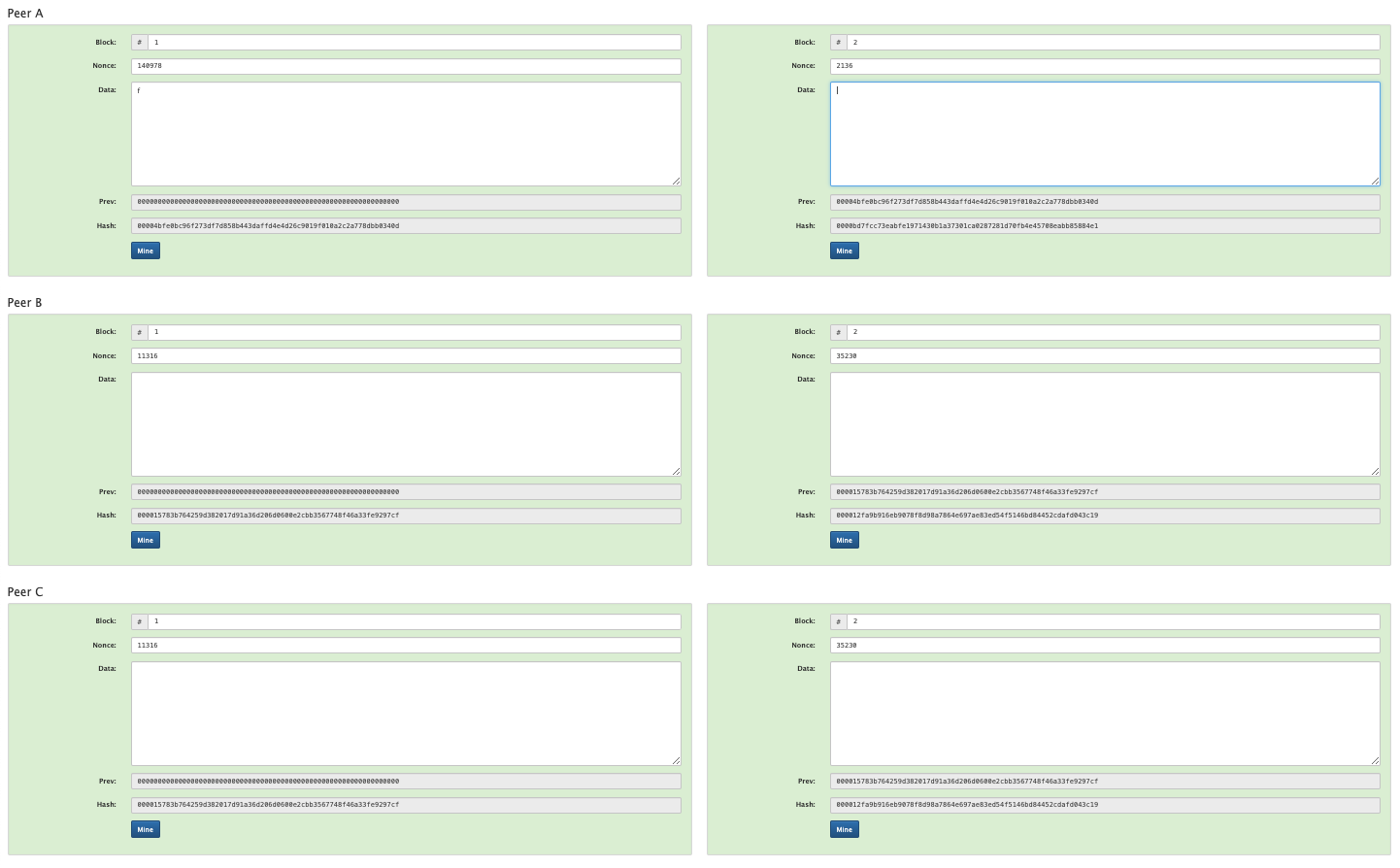
The network is distributed, meaning:
* Anyone can see the blockchain
* The network accepts the majority consensus
* The longest chain is typically considered valid
## Distributed System
The network is distributed, meaning:
* Anyone can see the blockchain
* The network accepts the majority consensus
* The longest chain is typically considered valid